

Traditional Elderflower Cordial
- felichiccuisine

- May 1
- 7 min read
The Smell of Summer. Easy Homemade Recipe.

Elderflower cordial is one of those quietly magical summer drinks: simple, unpretentious, and naturally full of life. With just a handful of ingredients and a few simple steps, you can enjoy the fresh, floral taste in every sip. Its delicate aroma and light flavour bring the joy of summer into your glass, evoking warm memories and a sense of timeless charm.
Made with just a few ingredients and a little time, it transforms into something gently fizzy, floral, and deeply refreshing. There’s no need for precision here, only a bit of care and an openness to let nature do its work at the height of elderflower season.
It’s at its best when the hedgerows are in bloom, the air is sweet with blossoms, and summer is just beginning to stretch out. A glass of it feels like a small return to slower days - light, fragrant, and effortlessly nostalgic.
There’s something magical about making Elderflower Cordial during elderflower season. By infusing fragrant elderflower blossoms in a sweet, tangy lemon syrup, you create a refreshing drink that’s perfect for any occasion.

A Simple Ritual of The Warm Season
Sometimes, the best things happen when you don’t try too hard. When you slow down, let nature take its time, and simply follow the rhythm of the season. Elderflower cordial, for me, is exactly that - a small ritual of slow living, nothing complicated, just something honest and grounding.
It’s not just a summer drink. It starts much earlier, in that quiet moment when you first notice the air changing - when a soft, sweet scent drifts through the wind and suddenly you know the elderflowers have bloomed along the roadsides and in hidden corners of gardens.
Elderflowers: Wild, Fragrant, Familiar
Elderflowers come from the elder tree (Sambucus nigra), a wild shrub widely found across Europe. Their scent is unmistakably floral, gently sweet, and they have long been used not only in drinks, but also in syrups and desserts.
Properties:
naturally refreshing
rich in antioxidants
traditionally believed to support the immune system
used in both warm and cold seasons
mildly detoxifying and diuretic in traditional herbal practice

Where Can You Find Elderflowers - Sambucus Nigra?
Elderflowers truly embody the scent of summer. These fragrant blooms typically grace us with their presence from late May to mid-June, depending on your location.
Elderflowers often grow wild in various regions, especially in temperate climates. Look for them in hedgerows, along the edges of forests, or near streams.
Make sure you're confident in your identification skills, as you want to be certain you're picking elderflowers and not a similar-looking, but potentially toxic, plant.
Farmers' Markets: Local farmers' markets often have vendors selling fresh produce, including elderflowers when they're in season. This can be a convenient option if you don't have time to forage or if elderflowers aren't readily available in your area.
Specialty Grocery Stores: Some specialty grocery stores, particularly those focused on organic or locally sourced products, may carry elderflowers during the peak season.

How to Identify Elderflowers: A Quick Guide
Appearance: Elderflowers have a unique appearance that sets them apart. They are small, creamy-white flowers arranged in flat-topped clusters known as "umbels."
Each flower has five petals and a sweet, floral scent. The leaves are opposite each other along the stem and are compound with 5-7 leaflets.
Distinctive Scent: One of the easiest ways to identify elderflowers is by their fragrance. They have a sweet, slightly musky aroma that is unmistakable once you've encountered it. Take a moment to sniff the flowers as you approach them.
Tips for Picking Your Own Elderflowers
Piking time: Elderflowers are at their freshest and most fragrant in the first few weeks of June. Harvest them on a dry day when the flowers are fully open and fragrant.
Choose the right location: Avoid picking elderflowers from roadsides or areas with high pollution levels. These flowers have a tendency to absorb fumes from passing vehicles, which can affect their quality.
Seek out aromatic crowns: Look for elderflower clusters with dense crowns. These are the ones that have fully opened. The more aromatic the flowers, the more flavorful your cordial will be.
Select unblemished blossoms: When picking elderflowers, prioritize those that are large and free from any blemishes or discoloration. Wilted or browned flowers may have a bitter taste and could negatively impact the final outcome of your recipes.
However, remember to gather only what you need, ensuring that you don't over-harvest and harm the surrounding wildlife habitat. Respecting and preserving the environment should always be a priority.

Natural Fermentation Recipe
I’ve long stopped using “quick” recipes that rely on added yeast. The most delicate elderflower cordial is the one that’s simply left to ferment at its own pace, moving with the rhythm of summer.
The real magic is already there, hidden in the pollen on the flowers and the peel of untreated lemons. That’s where the natural microorganisms live, and together with warmth and time, they slowly transform water and sugar into something lightly sparkling and beautifully alive.
I made this elderflower cordial using a traditional family recipe, allowing it to develop slowly through natural fermentation.
Fresh elderflowers are gently shaken to remove any insects, then combined with sugar (or honey) and sliced lemons in a large container.
Once a simple syrup is added and fully cooled, the mixture is left to sit and ferment naturally for several days, stirred gently from time to time.
After straining and bottling, the result is a fragrant, lightly sparkling drink with elderflower, lemon, and honey notes, shaped by time and warmth.

How To Make Elderflower Cordial, Step By Step
Step 1 – Preparing the syrup base
✔ In a large pot, add the water, sugar (or honey), lemon juice, and the zest of one untreated lemon. Stir gently until the sugar is fully dissolved.
✔ If needed, warm the mixture slightly, but do not let it boil. Then allow it to cool completely to room temperature.
Note: Don’t bring to a boil! It can affect the natural microorganisms involved in fermentation and dull the delicate aroma of the elderflowers.


Step 2 – Preparing the elderflowers
✔ Elderflowers should be fresh, fully open, and fragrant. Gently shake them to remove any insects.

✔ If needed, they can be briefly rinsed in cold water, turning them gently a few times. The goal is to clean them lightly without washing away the natural pollen.
✔ Remove the thicker green and woody stems, as they can give a bitter taste, keeping only the flowers.

Step 3 – Preparing the lemons
✔ Slice the remaining lemons into thin slices, using only untreated fruit. The peel plays an important role in the natural fermentation, so it’s essential to choose unwaxed lemons.

Step 4 – Assembling the jar
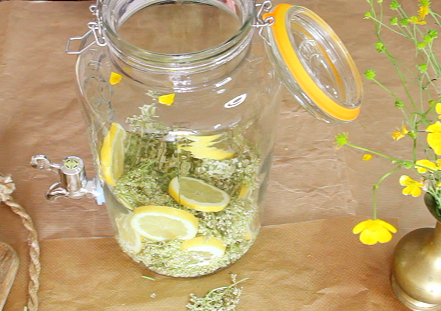
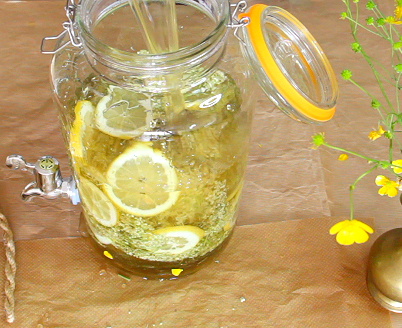
✔ In a large glass jar (about 4.5 to 5 litres), layer the elderflowers and lemon slices alternately.
✔ Pour the cooled syrup over the top, making sure everything is fully covered and submerged.


Step 5 – Natural fermentation
✔ Cover the jar with a clean cloth or a loosely fitted lid to allow air to circulate.
✔ Leave it at room temperature in a bright, warm place, but away from strong direct sunlight.
✔ Allow it to ferment naturally for 3 to 4 days. Stir gently once a day to help the process along.

Step 6 – Watching it develop
✔ During fermentation, small bubbles will begin to form on the surface. The aroma becomes deeper and more fragrant, and a gentle natural fizziness appears; a sign that the cordial is almost ready.

Step 7 – Straining
✔ Once fermentation is complete, strain the liquid through a fine sieve or cheesecloth to remove the flowers and lemons.
✔ What remains is a clear, fragrant drink with a light natural sparkle and a bright, refreshing character.
Frequently Asked Questions (FAQ)
Question | Answer |
Why is my elderflower cordial not fermenting? | Usually this happens because the temperature is too low or there is not enough sugar in the mixture. |
Is it normal for foam to appear? | Yes, foam is a natural sign of active fermentation. |
Can I use honey instead of sugar? | Yes, honey can be used as an alternative. It gives a rounder, lightly floral flavour, but it may slow down fermentation slightly or make it more delicate. For best results, use raw, unprocessed honey. |
How long does it keep? | Stored in the refrigerator, it will keep for about 4 to 6 weeks. |
Is elderflower cordial alcoholic? | It is not considered an alcoholic drink, but natural fermentation may produce very small traces of alcohol, usually negligible if consumed within a reasonable time. |
Love this recipe? Please leave a comment. Your feedback, suggestions, and adaptations are very helpful to other bakers!
Traditional Elderflower Cordial
A simple summer drink made with fresh elderflowers, lemon, and time. Lightly sparkling, delicately floral, and naturally refreshing, this homemade elderflower cordial captures the quiet charm of the season in every glass.
Servings: 4.5–5 L | Calories: 45–60 kcal / 250 ml | Prep: 20 mins | Fermentation: 3–4 days
Ingredients
14–16 large elderflower heads
500 g unrefined sugar or honey
3 untreated, unwaxed lemons
4–5 L water
Method
Step 1 | Prepare the syrup base
In a large pot, dissolve the sugar or honey in the water. Add the juice and zest of one lemon. If needed, warm the mixture gently to help dissolve the sugar, but do not let it boil. Allow it to cool completely to room temperature.
Step 2 | Prepare the elderflowers
Gently shake the elderflowers to remove any insects and trim away the thicker green stems. If needed, rinse briefly in cold water, turning them gently a few times without washing away the natural pollen.
Step 3 | Prepare the lemons
Slice the remaining lemons into thin rounds.
Step 4 | Assemble the jar
Place alternating layers of elderflowers and lemon slices into a large glass jar.
Pour over the cooled syrup, making sure everything is fully covered.
Step 5 | Let it ferment naturally
Cover the jar with a clean cloth or a loosely fitted lid.
Leave at room temperature in a bright, warm place for 3–4 days. Stir gently once a day.
Step 6 | Watch for the signs
Small bubbles will begin to appear and the aroma will become brighter and slightly tangy. This is a sign that the cordial is ready.
Step 7 | Strain and chill
Strain through a fine sieve or cheesecloth and transfer to clean bottles.
Store in the refrigerator and serve chilled with ice, lemon slices, or fresh mint.
Enjoy!
Notes |
1. Pick elderflowers on a sunny day when they're most fragrant.
2. Use only untreated lemons and freshly picked elderflowers for the best natural fermentation.
3. Avoid boiling: Boiling can affect the natural microorganisms and soften the delicate floral
aroma.
4. For longer storage, freeze the cordial in ice cube trays.
5. The cordial makes excellent gifts when bottled attractively.
A Thought Among Flavours “Let us dance in the sun, wearing wild flowers in our hair.” — Susan Polis Schutz |

Have you tried making this Elderflower Cordial? I'd love to hear about your experience! Share your thoughts and any creative twists you added to the recipe in the comments below. Or, tag me on Instagram (@FeliChic'Cuisine) when you post your recipe creations. Let's inspire each other. Thank You!



Comments